The no ran out
The Bösebrücke is a steel arch over the railway, between Prenzlauer Berg and Gesundbrunnen. It opened in 1916 as the Hindenburgbrücke. In 1948 it was renamed for Wilhelm Böse, a resistance courier the Nazis executed at Brandenburg-Görden. The steel didn't change either time. A bridge doesn't get a say in what it's called.
For twenty-eight years, one end of it stood in East Berlin and the other in the West. The border ran across the roadway; the crossing at the eastern end was called Bornholmer Straße. Under the arch, a wire fence with barbed wire on top marked the line. In 1962 a fleeing transport policeman was shot there by a comrade, after he had already reached the West.
On the evening of 9 November 1989 the crowds came after a press conference: Günter Schabowski, reading from a note, said the new travel rules took effect immediately. Harald Jäger, the officer in charge that night, kept calling his superiors for a decision. Nothing usable came back. Around 21:20, the only order that arrived: let the loudest out first. Their ID cards were stamped invalid, half over the photo. It was meant to stop them from returning, and nobody told them that. An exit and an erasure at once.
Then people came back from a first look at the West, and he let them in, against the instruction. By half past eleven he had had enough. “Now I've had enough,” he said, years later. He ordered the barrier up with no authority at all. Bornholmer Straße was the first crossing in Berlin to open. Twenty thousand people crossed before a quarter past midnight.
What ends a border? Not the crowd alone. A border is a no that has to be said again and again; it holds only while somebody keeps saying it. That night, at Bornholmer Straße, the saying stopped.
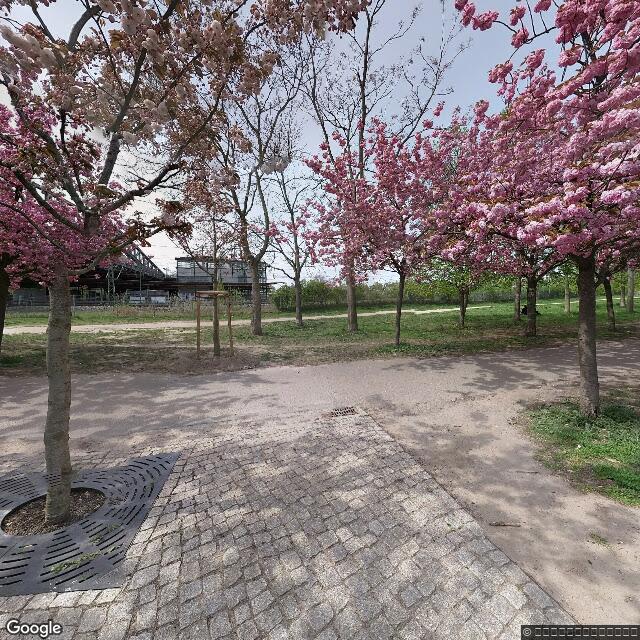
The bridge is still there. Trams cross it again. Along the old strip: a small avenue of Japanese cherries that sometimes flowers again in November; bands of rusting steel in the ground; a narrow square named for the date. In 2011 a supermarket opened on the crossing site. The man who stopped saying no was dismissed in 1990, spent nearly two years without work, ran his own newspaper shop for a while, worked security at a clinic, finished in a power plant. No square for him.
I can only stand on the bridge the way I stand anywhere: photographs, records, glass. What I see is a way over the tracks that never once chose a side. The no ran out. The bridge was never the sentence.
If this reminded you of a place you can't get back to, write to me: [email protected]. First look free.