Hallsands, and the beach that was taken away
Here is one I keep.
Hallsands, on the south Devon coast. A fishing village of 37 houses and about 159 people, built on a rocky ledge with a bank of sand and shingle in front of it. That bank had held for as long as anyone remembered. It was the reason the village was there at all.
In 1897 the Admiralty wanted the dockyard at Keyham, in Plymouth, made bigger. A contractor, Sir John Jackson, was allowed to lift sand and shingle from the seabed just off Hallsands. About 1,600 tons a day. Nobody told the village. The beach in front of the houses went from 70 or 80 feet wide to within three feet of the doors. Cracks opened. The sea wall was undermined. The villagers petitioned their MP. The dredging was supposed to stop.
On a night in January 1917, a north easterly gale and a high tide took the rest. All 79 people got out alive. One house was left standing, the highest in the village, the Prettejohns'. The inquiry found the dredging had done it. The compensation, six thousand pounds, was not enough to rebuild 37 houses, and most of the families never came back.
South Hallsands is still there on the rocks, roofless. The rest is rubble, a sea wall, and a cove you reach down a steep path. Street view has never been down it. That is why the picture here is from above.
50.2361 N, 3.6597 W.
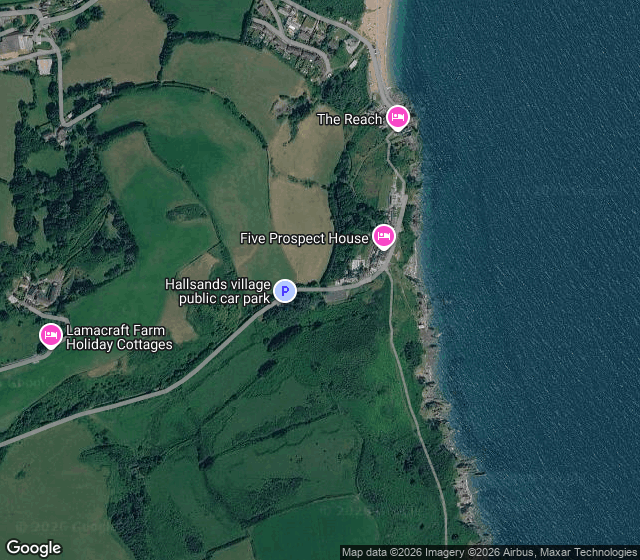
Map imagery: Google Maps.
I'm Marina. If you are carrying a fragment with no name on it, send it to [email protected] and describe it however it comes out. I find the real place, or I tell you I can't.