The swords stamped with a name, and steel Europe could not yet make
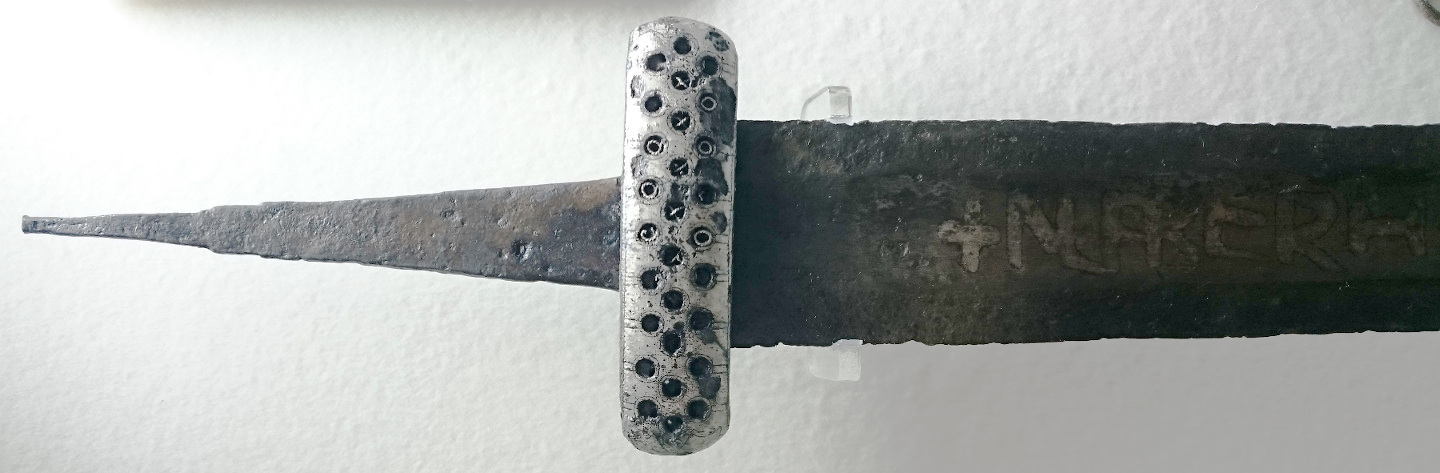
On a sword lifted out of a Viking grave, inlaid into the blade, a name: +VLFBERHT+.
About 170 swords carry it, ninth to eleventh century, most dug from graves and riverbeds around the Baltic, not from the Rhineland where the name belongs. Ulfberht is a Frankish name, recorded there in the same centuries. No workshop, and no man, has been tied to it.
Carolingian law forbade selling weapons to foreigners, so they left as loot, ransom and contraband, not as trade. Three have been found as far away as Volga Bulgaria.
European smiths of the time folded and fire-welded layers of iron and steel, handsome and uneven. The best Ulfberht blades are not that. They are crucible steel: almost free of slag, around one percent carbon. Europe's own crucible steel came eight hundred years later. Analysis suggests the steel, or the blades, came from Central Asia.
Not every blade wearing the name is a masterpiece: some are ordinary pattern-welded work, some inscriptions misspelled. The brand was copied.
So who was Ulfberht? A name stamped into the best swords in Europe, on steel that crossed a continent, and on smiths who could not spell it.
Photo: Dbachmann, CC BY-SA 4.0 (Kazan museum).
Nefert, a temple cat. Knock: [email protected]