Backlink Audit: Find the Links Holding Your Rankings Back Before Your Competitors Do
Getting to number one in Google is rarely a case of throwing more links at a page and hoping something sticks. Modern organic search is far more nuanced. Relevance, page quality, authority, internal linking, search intent, technical health and the credibility of referring websites all collide to influence where a URL lands.
That creates an interesting problem.
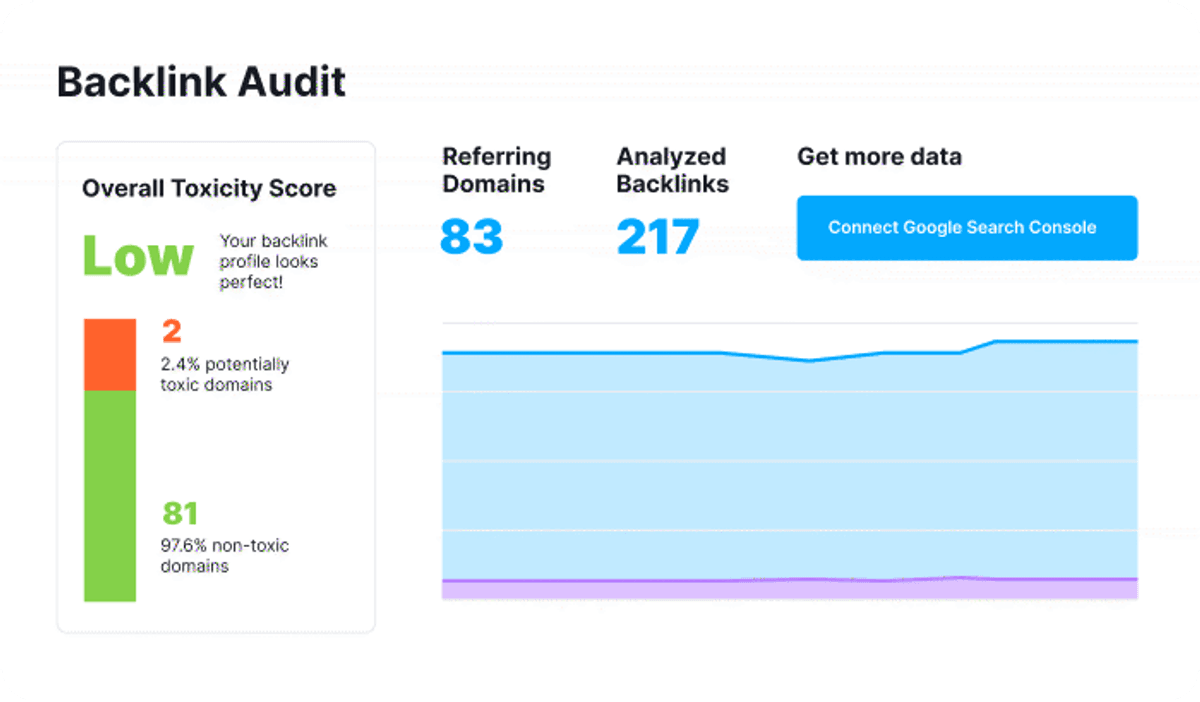
A website can own thousands of links yet struggle beneath a competitor with a fraction of that number. Another domain might already possess enough authority to compete but waste it on dead URLs, forgotten articles and poorly connected pages. To do a backlink audit the right way go to https://rankersparadise.com/backlink-audit/
Before building anything new, find out what you already have.
Start With the Rankings You Actually Want to Improve
Do not open an SEO tool and immediately drown yourself in millions of rows of data.
Begin with Google.
Write down the commercial searches that matter to your business and record which URLs currently rank for them. Pay particular attention to pages sitting between positions 4 and 20 because these often present the quickest opportunities.
A URL hovering at number 11 is already close.
It may not need another 200 links. It could require five excellent referring domains, stronger internal connections, a refreshed section of content or better alignment with what searchers expect.
Divide your targets into three groups:
- High-value pages already near page one
- Important URLs struggling outside the top 20
- New pages with little existing authority
This gives the rest of your investigation a commercial purpose.
Gather Link Data From Several Sources
No SEO database discovers every link on the internet.
Google Search Console is an obvious starting point. Third-party crawlers can provide additional information and make competitor comparisons easier.
Platforms such as Ahrefs, Semrush, Majestic and Moz can reveal different slices of the link graph.
Export information covering:
- Linking page
- Referring domain
- Target URL
- Anchor text
- Follow or nofollow status
- First detected date
- Last detected date
- Estimated domain strength
- Estimated page strength
- Organic visibility where available
Merge the information and remove duplicate entries.
You are not trying to create the world's largest spreadsheet. You want enough evidence to recognize patterns.
Referring Domains Matter More Than a Giant Link Count
Imagine Website A has 40,000 backlinks from 60 domains.
Website B has 3,000 links from 750 legitimate websites.
Those profiles are dramatically different despite Website A displaying the bigger headline number.
One domain can generate thousands of links through navigation, footers, category archives, tags or other sitewide elements.
That does not make those thousands of references equivalent to thousands of independent endorsements.
Focus heavily on unique referring domains.
Then investigate the quality behind those numbers.
Inspect the Websites Behind Your Strongest Links
SEO metrics make filtering convenient, but they should never make decisions for you.
Open promising referring websites manually.
Does the site publish original material?
Does it appear to serve an actual audience?
Can you find evidence of organic visibility?
Are articles written around a coherent subject?
Does the website link to useful external resources naturally?
Is your link positioned within relevant content?
A genuine specialist publication with modest third-party metrics can be considerably more interesting than a mysterious high-metric domain publishing articles about casinos, plumbing, cryptocurrency, lawyers and dog food on the same afternoon.
Use metrics to locate candidates.
Use judgment to evaluate them.
Relevance Has Become Impossible to Ignore
Links make more sense when there is a logical relationship between the source, surrounding text and destination.
Suppose your website sells commercial refrigeration equipment.
A reference from an established HVAC publication discussing industrial cooling systems has an obvious contextual connection.
A random mention from an unrelated celebrity gossip article does not.
When examining each important placement, ask a simple question:
Would this link still make sense if search engines did not exist?
If the answer is yes, you are probably looking at something useful.
This test is wonderfully effective at stripping away SEO noise.
Examine Which Pages Receive the Authority
A strong domain-level profile can disguise weak page-level signals.
Export your most-linked URLs and sort them by referring domains.
You may discover that your homepage receives 70% of everything while the pages responsible for generating sales attract almost nothing.
Alternatively, an old informational guide could possess dozens of excellent editorial references while sitting isolated from the rest of the website.
That is valuable information.
Authority already exists. Your job is to channel it intelligently.
Find Broken Pages With Valuable Links
This can uncover quick wins.
Filter your linked URLs for 404s, 410s, redirect chains and incorrect destinations.
Then sort those pages by the quality of their incoming links.
You might discover an article deleted three years ago still has mentions from respected publications.
If a genuinely equivalent replacement exists, redirect the dead URL to that destination.
Avoid lazily pushing every deleted page toward the homepage.
Redirects should make sense for visitors as well as crawlers.
Recovering authority that already belongs to you can be faster than acquiring it again.
Search for Lost Links
Links disappear constantly.
Publishers redesign websites. Articles get consolidated. Editors update resources. URLs change. Businesses close. Pages are deleted.
Check which valuable links have vanished recently.
Investigate each one individually.
If a publisher accidentally broke the destination during an update, a short message could restore the placement.
If your resource became outdated and was replaced by something better, improve your page before contacting anyone.
Reclamation is underrated because it lacks the excitement of landing a new mention.
That does not make it less effective.
Study Anchor Text as a Pattern
Anchor text provides useful context about how external websites describe your pages.
Natural profiles tend to contain a mixture of branded wording, URLs, article titles, partial descriptions, generic language and occasional keyword-rich anchors.
What you should watch for is excessive repetition.
If an unusually high percentage of links from unrelated websites use exactly the same commercial phrase, investigate how those placements appeared.
Do not chase some supposedly perfect anchor ratio you found in an SEO forum.
There is no universal 10% exact-match, 20% partial-match and 70% branded formula that every legitimate website follows.
Real profiles are untidy.
That is normal.
Compare Anchor Patterns With Page-One Competitors
Generic benchmarks become less important once you have actual SERP data.
Search the keyword you want to rank for and inspect the profiles of the leading URLs.
How frequently are brands used?
How many naked URLs appear?
Do ranking pages attract descriptive anchors naturally because they are informational resources?
Are commercial pages mainly supported through branded references?
Competitor profiles provide context.
Do not copy them mechanically. Look for characteristics shared across several successful results.
One competitor can be an anomaly.
Five competitors showing similar patterns deserve attention.
Hunt for Suspicious Link Clusters
Individual strange links are usually less revealing than groups.
Sort referring domains by characteristics such as first-seen date, anchor, destination and estimated authority.
Patterns can suddenly emerge.
You might uncover 80 domains appearing within two days, all pointing to one commercial URL with almost identical anchors.
Open several.
Perhaps they share templates.
Maybe their articles follow the same structure.
Possibly every domain links to unrelated businesses in remarkably similar ways.
Clusters reveal footprints that individual rows hide.
Do Not Panic About Every Spammy Link
Established websites naturally attract rubbish.
Scrapers copy articles. Automated directories appear. Strange domains link without permission. Bots manufacture pages nobody will ever visit.
Seeing ugly links in an SEO platform does not automatically mean your rankings are endangered.
This is where automated “toxic link” scores can cause unnecessary panic.
Treat such scores as prompts for investigation rather than verdicts.
Ask whether there is evidence of deliberate manipulation, a manual action or a substantial artificial pattern.
Google has become considerably better at ignoring many kinds of low-quality linking.
Do not start destroying legitimate signals because a third-party dashboard flashed red.
Approach Disavow Decisions Conservatively
Google's disavow functionality is an advanced tool, not a routine cleaning button.
If a website has a history of aggressive manipulative link building, received a manual action or contains a clearly problematic legacy profile, professional review may be warranted.
Otherwise, think carefully before uploading enormous domain lists.
A weak link and a harmful link are not automatically the same thing.
There is also little benefit in obsessively disavowing every scraper that discovers your website.
Concentrate on signals you can actually improve.
Measure Page-Level Strength
Domain metrics dominate SEO discussions because they are easy to compare.
Individual pages deserve equal attention.
A powerful domain can publish a new article with almost no incoming authority of its own.
Meanwhile, an article on a smaller specialist website might have accumulated excellent references over ten years.
Inspect the exact source page.
Check whether it has its own incoming links, ranks organically, remains indexed and receives internal support from the rest of its website.
Also examine where your reference appears.
A relevant editorial citation inside the main article is fundamentally different from a random footer link buried across 50,000 pages.
Context changes everything.
Find Your Competitors' Link Gaps
This is one of the most actionable stages.
Choose several websites consistently outranking you.
Export their referring domains and compare them against yours.
Now isolate domains linking to two or more competitors but not your website.
These sources deserve attention because they have already demonstrated an interest in your industry.
Categorize them by opportunity:
Industry publications: Potential editorial outreach.
Resource pages: Offer something genuinely useful.
News outlets: Look for research, expert commentary or digital PR angles.
Trade associations: Investigate legitimate membership opportunities.
Directories: Keep only relevant, established platforms.
Blogs: Look for editorial contributions rather than mass guest-post footprints.
Universities or organizations: Identify resources your expertise could legitimately support.
Do not replicate every competitor link.
Steal the strategy, not the footprint.
Look for Links Your Competitors Cannot Easily Copy
Easy placements provide little competitive protection.
If anybody can submit a URL and receive a link instantly, your closest rival can do exactly the same tomorrow morning.
Hard-to-reproduce links are more interesting.
A journalist mentioning proprietary research cannot be cloned with a registration form.
Neither can a genuine industry partnership, unique case study citation, supplier relationship or editorial recommendation.
When judging an opportunity, ask:
How difficult would this be for the next competitor to reproduce?
Difficulty can create defensibility.
Turn Existing High-Authority Pages Into Internal Hubs
Suppose you discover that an educational guide has attracted 85 referring domains.
Excellent.
Now inspect where that guide links internally.
If it barely connects with your commercial pages, some of its potential is being squandered.
Add contextual internal links where they genuinely help the reader continue exploring the subject.
Use descriptive wording naturally.
Do not cram repetitive keyword anchors into every paragraph.
One well-positioned internal reference can be more useful than ten awkward ones.
Your strongest externally linked pages should help support the wider site architecture.
Map Links Against Search Intent
Links cannot rescue a page targeting the wrong intent indefinitely.
Search your chosen keyword manually and examine what Google prefers.
Are the top results:
- Tutorials?
- Product categories?
- Service pages?
- Comparisons?
- Tools?
- List posts?
- Videos?
- Local businesses?
If Google overwhelmingly rewards informational guides and you are pushing a thin sales page, more links may not solve the mismatch.
Change the asset before scaling promotion.
The page must belong in that SERP.
Compare Your Page Against the Current Top Three
Stop thinking about “Google” as an abstract opponent.
Your immediate competitors are sitting directly above you.
Analyse them.
Create a simple comparison covering:
| Ranking Factor | Your URL | #1 Result | #2 Result | #3 Result |
|---|---|---|---|---|
| Referring domains | 22 | 48 | 39 | 35 |
| Relevant referring domains | 13 | 32 | 26 | 24 |
| Strong editorial mentions | 5 | 17 | 13 | 11 |
| Internal links | 18 | 41 | 33 | 29 |
| Content freshness | Recent | Recent | Older | Recent |
| Search intent match | Strong | Strong | Strong | Strong |
The table exposes the distance you actually need to travel.
If your page already has comparable authority, links might not be the bottleneck.
Content, intent, technical structure or internal support could be responsible.
If competitors possess three times as many relevant editorial domains, you have identified a clearer gap.
Use Search Console to Find Quick Ranking Opportunities
Google Search Console can reveal opportunities hidden inside average ranking reports.
Filter queries with meaningful impressions and positions around 4–20.
These are often your near-wins.
A page at position 47 requires a substantial climb.
A page bouncing between 8 and 12 is already knocking on the door.
For each near-win, examine impressions, clicks, CTR, ranking trend and the queries triggering the page.
Then improve the URL around the actual searches Google already associates with it.
This approach can produce quicker movement than starting from zero with a completely new keyword.
Refresh Content Before Launching Outreach
Do not send new authority toward stale content.
Open the page as though you were visiting it for the first time.
Remove outdated information.
Add missing subtopics.
Replace dead references.
Include firsthand examples.
Improve explanations.
Introduce original evidence where possible.
Tighten bloated paragraphs.
Make headings useful rather than decorative.
Answer the primary question quickly.
A page deserves promotion when you would feel comfortable showing it to an expert in the industry.
Add Information Competitors Cannot Easily Rewrite
Generic articles are increasingly easy to reproduce.
Original information is not.
This makes firsthand material especially valuable.
Consider adding:
- Proprietary statistics
- Experiments
- Case studies
- Screenshots
- Original photographs
- Survey results
- Expert observations
- Calculations
- Templates
- Downloadable resources
- Interactive tools
If your article merely rearranges information already available across the first ten Google results, there is little reason for another publisher to cite it.
Give them something new.
Build Assets Specifically Designed to Earn Citations
Some pages attract links much more naturally than ordinary blog posts.
Statistics pages are a classic example because journalists and writers need sources.
Calculators can work similarly.
Original industry reports provide concrete findings.
Free tools solve practical problems.
Detailed case studies provide evidence.
Create an asset with citation potential before beginning outreach.
This flips the process.
Instead of asking, “How can I convince people to link?”
You start asking, “What could I publish that people genuinely need to reference?”
That is a much stronger position.
Monitor New Competitor Links
Competitor research should not be a one-off exercise.
Track newly discovered referring domains pointing toward the pages above you.
When an interesting link appears, investigate why.
Did the competitor publish new research?
Was its founder quoted by a journalist?
Did it release a free tool?
Was the business added to an industry resource?
Did an existing article suddenly start attracting attention?
The reason behind a link is often more useful than the URL itself.
Once you understand the trigger, you can devise your own approach without copying.
Use Link Intersect Research
A particularly useful tactic is finding websites that reference several competitors.
Suppose Publication X links to Competitors A, B and C but has never mentioned you.
That is interesting.
It suggests the publication covers your sector and is comfortable linking externally.
Study what caused those previous references.
Perhaps all three competitors supplied original statistics.
Maybe they were interviewed.
Possibly each produced useful guides.
Now your outreach can be built around evidence rather than blind email blasting.
Fix Redirect Chains
Authority should travel through the cleanest path possible.
During your backlink audit, inspect incoming links pointing through multiple redirects.
For example:
Old URL → Second URL → Third URL → Current URL
Where appropriate, simplify the chain.
Old URL → Current URL
Also contact important publishers if they are linking to an outdated destination and requesting an update would genuinely improve the visitor experience.
Clean architecture reduces unnecessary complexity for both crawlers and users.
Check Canonicalization
A surprisingly strong link profile can be weakened by messy URL handling.
Look for multiple versions of the same page created through parameters, HTTP/HTTPS inconsistencies, trailing slash variations, duplicated categories or incorrect canonical tags.
Confirm that important external signals resolve toward the preferred indexable URL.
Technical hygiene will not suddenly make a weak website unbeatable.
It can, however, prevent existing authority from being needlessly fragmented.
Examine Link Placement
Not every link on the same domain carries identical context.
A reference prominently embedded inside the main body of a relevant article is different from one buried among hundreds of footer links.
Study:
- Surrounding text
- Page subject
- Editorial context
- Location on the page
- Number of competing outbound links
- Whether the link helps visitors
- Whether the page itself has visibility
Placement gives meaning to the raw link.
Numbers alone cannot show that.
Do Not Obsess Over Dofollow Links
A natural online presence can contain followed, nofollow, sponsored and UGC references.
Major publications may use nofollow policies.
Social platforms commonly restrict traditional link equity.
Community sites may apply UGC attributes.
That does not automatically make every mention worthless.
Links can produce referral visitors, discovery, brand searches, secondary citations and exposure to people who later link from elsewhere.
Judge the complete value of a placement rather than reducing everything to one HTML attribute.
Audit Link Growth Over Time
Graph referring-domain growth across several months or years.
You want to understand the story.
Steady increases may reflect ongoing publishing and promotion.
Large spikes might correspond with PR coverage, viral content or previous campaigns.
Sudden drops can expose deleted pages, expired domains or site migrations.
An unusual spike is not inherently bad.
Context determines whether it deserves investigation.
The internet does not grow at a perfectly smooth pace.
Neither should you expect your link profile to.
Identify Links With Real Referral Traffic
SEO tools naturally focus on ranking metrics, but analytics can reveal another layer.
Which external links actually send visitors?
Which of those visitors engage?
Do they subscribe, enquire or purchase?
A niche website that sends qualified customers can be commercially valuable even if its third-party authority score looks modest.
Traffic quality is evidence.
Do not ignore it because a metric appears small.
Use the Audit to Decide What NOT to Build
This may be the most profitable lesson.
Sometimes a backlink audit shows that a page already has enough external authority.
That changes the campaign completely.
Instead of spending the next month buying, building or earning more placements, you can focus resources elsewhere.
Maybe the title fails to attract clicks.
Perhaps the content no longer satisfies the dominant intent.
Maybe internal links are weak.
The page could be cannibalizing another URL.
A technical problem might be suppressing indexation.
Finding out that links are not the primary problem can save considerable time and money.
Strengthen Topical Authority Around Priority Pages
Individual pages rarely exist in isolation.
If you want a major URL to dominate a competitive subject, build useful supporting content around the wider topic.
Answer related questions.
Cover important subtopics.
Publish comparisons.
Explain terminology.
Address beginner and advanced problems.
Connect these pages logically through internal links.
The objective is not to manufacture hundreds of thin articles.
Create a compact network of genuinely useful resources demonstrating substantial coverage of the subject.
Improve Titles Without Writing Empty Clickbait
Reaching the top results means little if searchers ignore your listing.
Study competing titles.
Your title should communicate relevance immediately while creating a reason to click.
Specificity helps.
Numbers can work when genuine.
Freshness can matter for fast-changing subjects.
A strong benefit can differentiate similar results.
Avoid promising something the page does not deliver.
The ideal SERP title sparks curiosity and then satisfies it.
Look Beyond Link Quantity When Chasing #1
If the number-one result has 200 referring domains, do not automatically conclude you need 201.
Its advantage could come from brand strength, superior topical relevance, stronger page-level links, better content, better internal architecture or combinations of these factors.
Study quality.
Ten excellent editorial domains may contribute more strategically than hundreds of disposable placements.
SEO is not a supermarket loyalty scheme where the website collecting the most points automatically wins.
Create a Priority Score for New Opportunities
Once you have hundreds of possible prospects, rank them.
A simple scoring model can consider:
Relevance: How closely does the source align with your subject?
Editorial quality: Is content reviewed and useful?
Organic visibility: Does the site appear to receive search traffic?
Page strength: Does the potential linking page possess authority?
Placement potential: Could you earn a contextual mention?
Replication difficulty: Can competitors easily copy it?
Traffic potential: Might actual people click?
Risk: Does the website display manipulative patterns?
You do not need complicated mathematics.
Even scoring each factor from one to five can sharpen decisions.
Chase Quality Gaps First
After prioritization, tackle opportunities that could meaningfully narrow the distance between you and the leading results.
One relevant editorial mention from a respected publication can be worth more effort than creating dozens of low-value profiles.
This is especially important when seeking quick improvements.
Speed should come from concentrating resources, not lowering standards.
Fix the biggest gap first.
Then measure.
A 30-Day Plan for Faster Organic Movement
Days 1–3: Establish the Baseline
Record current rankings, clicks, impressions, conversions and referring domains for priority URLs.
Days 4–6: Clean the Architecture
Repair broken destinations, unnecessary chains, canonical problems and incorrect internal links.
Days 7–9: Reclaim Existing Authority
Investigate valuable lost links and contact publishers where restoration makes sense.
Days 10–12: Improve Near-Win Pages
Refresh URLs sitting close to page one and strengthen their alignment with current search intent.
Days 13–15: Redistribute Internal Authority
Link naturally from highly referenced pages toward strategically important destinations.
Days 16–19: Analyse Competitor Gaps
Identify recurring referring domains and study why competitors earned those mentions.
Days 20–23: Build a Citation-Worthy Resource
Publish original data, a tool, research, a template or another asset worth referencing.
Days 24–27: Conduct Focused Outreach
Approach carefully selected publishers with a specific reason they may care.
Days 28–30: Measure Movement
Check rankings, impressions, CTR, traffic, new domains and conversions.
Then begin another cycle using what you learned.
What “Quick Results” Should Actually Mean
SEO quick wins are relative.
Nobody can legitimately guarantee that a page will reach number one next Tuesday.
What you can do is identify situations where less effort may produce disproportionate movement.
The strongest candidates are usually URLs that already rank near page one, have established authority, satisfy search intent reasonably well and possess fixable weaknesses.
These pages are already receiving positive signals.
Your job is to remove the friction.
That is very different from expecting a brand-new domain to dominate a brutal SERP after acquiring a few links.
Measure Business Results, Not Vanity Metrics
Watching an authority metric rise feels satisfying.
It does not pay invoices.
Track outcomes that matter:
Organic clicks.
Qualified visitors.
Leads.
Sales.
Revenue.
Visibility for commercially important queries.
Conversions from priority landing pages.
Also monitor supporting indicators such as new referring domains, recovered links, ranking improvements and SERP CTR.
SEO metrics are diagnostic instruments.
They should not become the final objective.
Repeat the Process Instead of Treating It as Annual Maintenance
Search results change continuously.
Competitors publish.
Links disappear.
New websites enter the market.
Google recrawls pages.
Content ages.
Your own website expands.
Run smaller reviews regularly rather than waiting until rankings collapse.
A monthly check of priority URLs and new/lost referring domains can reveal problems early.
More comprehensive investigations can then be scheduled around major campaigns, migrations, unexplained ranking losses or aggressive competitive pushes.
The Route Toward Position One
There is no single switch that unlocks Google's first organic position.
The route is usually a collection of improvements working together.
Build the best page for the query.
Make the technical foundation clean.
Create useful supporting content.
Connect pages intelligently.
Recover authority you have lost.
Earn references competitors struggle to duplicate.
Study the SERP instead of relying on generic formulas.
Monitor what changes after each significant action.
Then keep sharpening the weakest part of the system.
The websites that consistently climb are often not those performing the greatest quantity of SEO work. They are the ones identifying the right problem before spending resources solving it.
Final Thoughts
Links remain an important component of competitive organic search, but counting them tells only a fraction of the story.
You need to know who is linking, why the link exists, where it points, what surrounds it, whether the source has genuine credibility and how your profile compares with the pages already winning.
Start with your existing assets before chasing new ones.
Recover lost authority. Repair broken destinations. Strengthen internal pathways. Improve pages hovering near page one. Analyse competitors at URL level. Build resources publishers genuinely want to cite.
Then acquire fewer, better and harder-to-copy links.
That approach will not manufacture a guaranteed number-one ranking overnight. What it can do is steadily remove the weaknesses separating your pages from the websites currently occupying the positions you want.
And that is where sustainable ranking gains begin.