Doom: The Dark Ages: Engaging Design Features and Concepts
An interesting design philosophy in Doom: The Dark Ages feels, at first glance, almost contradictory to the known DOOM formula. You are continuously flooded with demons – an endless onslaught of projectiles falling onto you, all while your main goal is to simply go full offense. Defending yourself in any sort of traditional manner seems counterintuitive and non-existent. Strangely enough, though, a sense of invincibility looms over the entire action.

Combat loops like these create a paradoxical sensation between being constantly attacked yet somehow feeling untouchable. Because self-preservation is achievable through relentless gunfire, death can seem disconnected from reality. These sensations can be invigorating but also liberating and provide relief from engagement's real consequences. The combat flow feels fundamentally slackened as Eternal loses some of its hand-and-glove engagement rhythm in favor of more boundless joy.
The Combat Loop Is Different than You Know from DOOM (2016)
The balance shift in the combat loop, as well as the much lower emphasis on hot-swappable weapon mods, is most likely due to how controller ergonomics and comfort are prioritized. Doom: Eternal's dynamic modification systems, where weapons would change function mid-use (like an automatic shotgun transforming into a grenade launcher), required precision timing and intricate button presses—often in rapid succession. While some might find this exhilarating, it could be rather unwieldy for others, especially those using a gamepad.
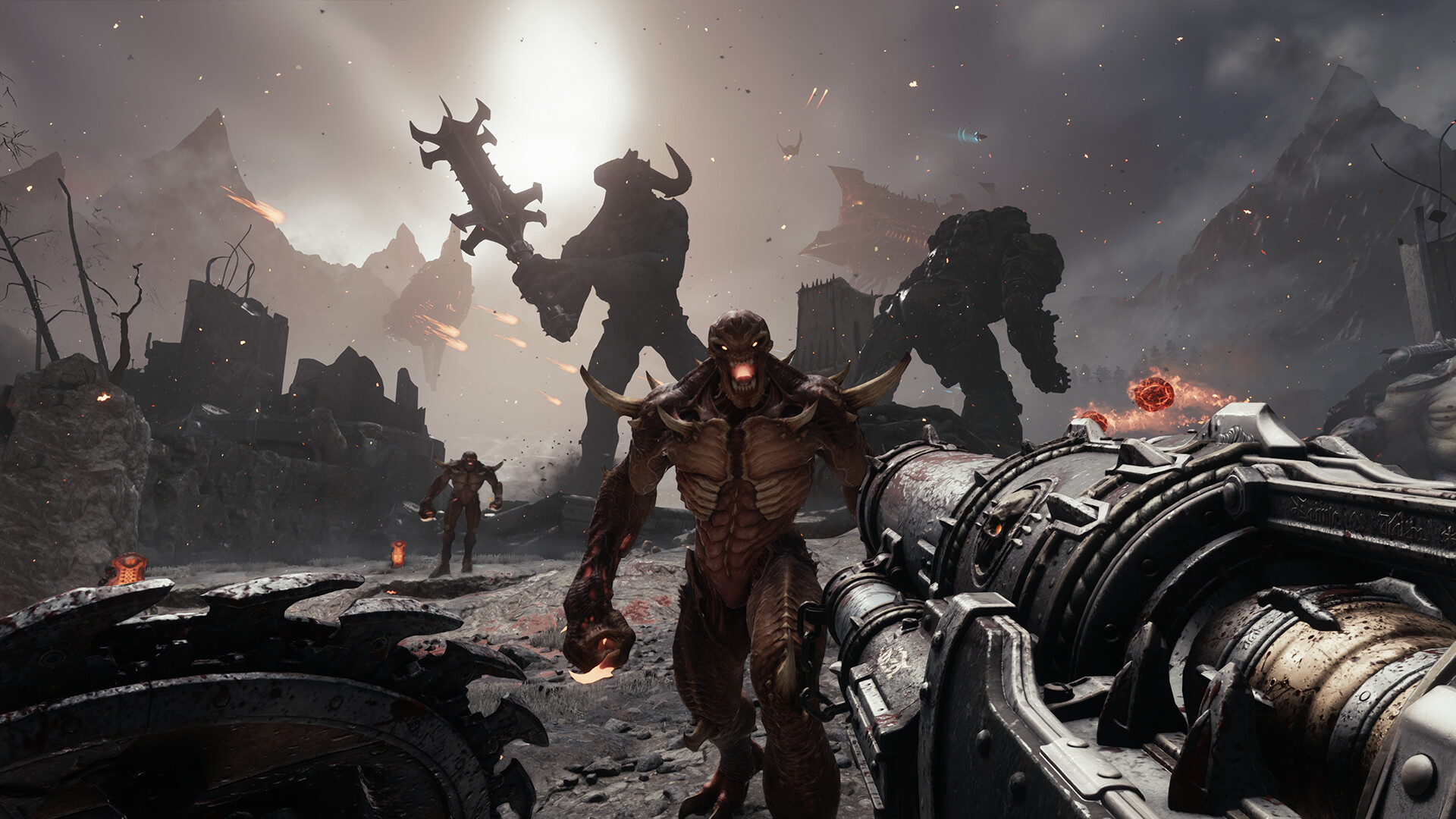
Doom: The Dark Ages balances this complexity by removing active enhancement upgrades and shifting to passive buffs instead. After obtaining an upgrade, its advantages become permanently integrated into the weapon's basic functionalities. With upgrades, earning benefits once acquired means that they don't need to be constantly engaged to activate; integration simplifies alongside warfare as mental load decreases aimlessly drifting through action while precision targeting and firing becomes their weapon of choice. Though departing from Eternal's depth-modding system reflects a wider accessibility effort meant protecting the exhilarating display of demolishing demons so players with diverse setups or preferences can enjoy it without losing visual fidelity or impact id Software (developers) relentlessly delivers.
The Engine's Roar: Visual Fidelity and Optimization
It further cements ID Software's reputation as a top developer with a powerhouse engine that seems to be built for devasting demon slaying (even if not quite recommended for players who buy PS5 FPS games). The game showcases remarkable frame rate performance on a wide array of hardware, reinforcing its optimization prowess. Even at maximum graphical settings, the engine effortlessly manages the magnificent display of colossal battles along with the fire and dismemberment particle effects that come pouring out from weapons. The visual immersion is breathtaking as well, especially with DLSS and FSR technology being used.

The new enemy models, along with the explosions and gore animations, are all rendered with breathtaking precision and motion. Based on the seamless consistency of performance amid chaotic on-screen action, the engine has a robust architecture that is able to sustain smooth flow while visually stunning players in demon slaying. DOOM: The Dark Ages stands as another benchmark for how the game can push graphical limits while remaining accessible and performant across a diverse range of hardware. But no longer an FPS.