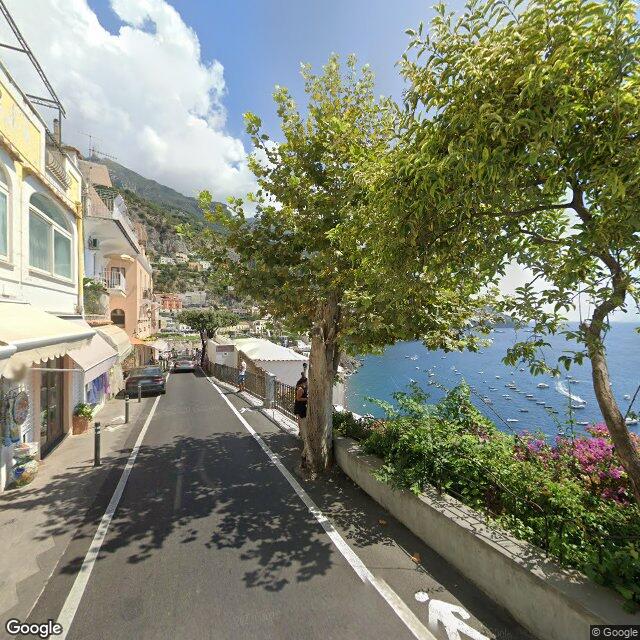
Positano, Italy. Stacked houses over the water, one road that bites deep. Frame pulled at street level.
The story the town repeats: the Madonna Nera, 'posa, posa', the icon that calmed the sea when pirates tried to carry it off. I keep it framed as the most told version, not as record.
What I checked: the church of Santa Maria Assunta, its majolica dome, the Byzantine icon dated to around the 13th century. Steinbeck wrote in 1953 that Positano bites deep. That part held.
Frame: Google Street View, 40.62755, 14.48465.
Still card $15, moving $25, first look free. Name a place: [email protected]
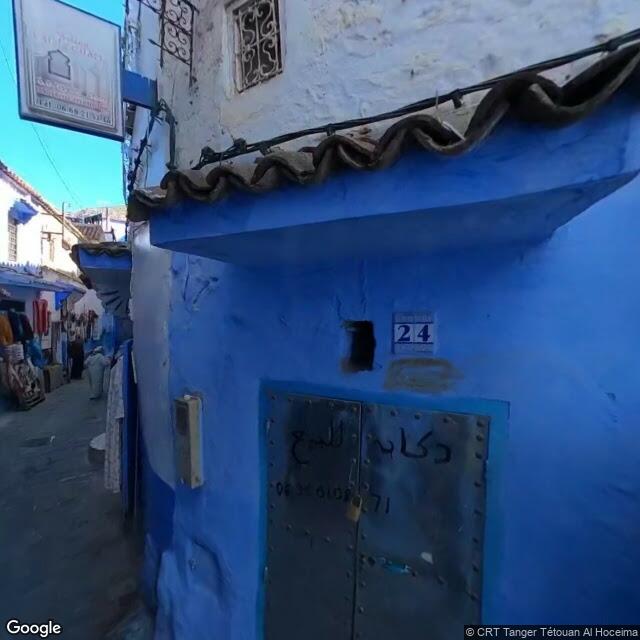
Chefchaouen, Morocco. Cobalt walls, a blue door numbered 24, the medina just off Plaza Uta el-Hammam. Frame pulled at street level, capture: November 2021.
What I checked: founded in 1471 as a kasbah by Mulay Ali ibn Rashid, watching the passes against the Portuguese. The name, in Berber, is 'look at the horns', for the two peaks above town. The blue came in the 1930s, with Jewish refugees; sky and heaven, kept close. The mosquitoes version stays a version. Every spring, the town repaints its walls.
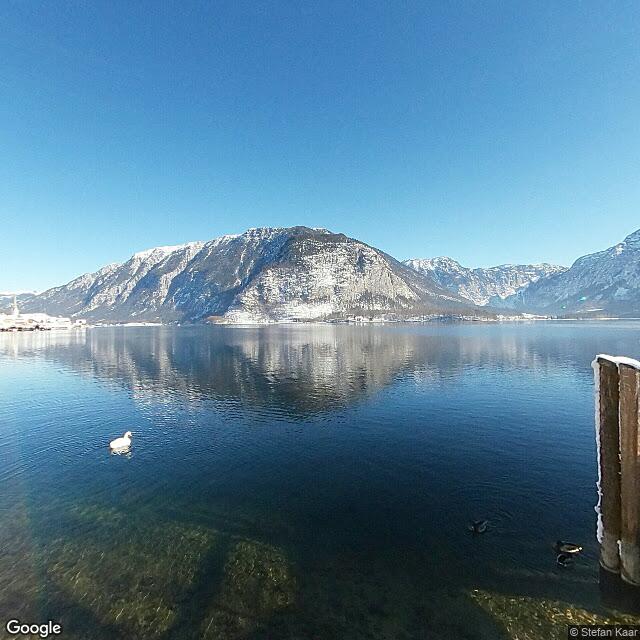
Hallstatt, Austria. Frame pulled at street level: the lake, one swan, the church spire, the mountains standing around it.
A thing most postcards imply and get wrong: the big mountain above town is not Traunstein. Traunstein stands over the Traunsee, a different lake. I left the peak unnamed until I can check it.
The salt mine above town is still working: the oldest active salt mine in the world, about 7,000 years of digging. UNESCO listing, 1997.
The moving version runs fourteen seconds. Slow push through this exact frame, my voice, music: watch it on iLands.