Kliniken UK Surgery Notes

Many people notice the first signs of ageing around the eyes and forehead. A brow that has slowly dropped can make the face look tired or stern even when you feel well and cheerful. Friends may ask whether you are worried or unwell, and make-up seems to sit differently on the eyelids. For some patients the answer lies in a brow lift, a procedure that repositions the brow to a more rested, open position. At Kliniken, a consultant-led cosmetic surgery clinic in Harrogate, brow lift is one of the procedures we discuss most carefully, because the right decision depends on understanding exactly what is causing the heavy look.
Clinician speaking with a patient during a consultation

This guide explains who tends to benefit, how the surgery works in general terms, what recovery involves and which questions are worth taking to a consultation. It is information for orientation, not a substitute for a personal assessment.

Understanding a Low Brow Before Choosing a Procedure

A heavy upper face has more than one possible cause, and the treatment differs for each. Sometimes the brow itself has descended. The skin and soft tissue supporting it relax over the years, and the outer part of the brow in particular can sink below the bony ridge. In other cases the problem is excess skin on the upper eyelid, which hangs over the lashes and creates the same tired impression. Often the two occur together.

This distinction matters because a surgeon who treats only the eyelid when the brow is low can leave you with a result that still looks heavy, and a surgeon who lifts a brow when the real problem is lid skin can leave you with an unnatural expression. A careful assessment looks at the position of the brow at rest, how it moves, the amount of lid skin and how symmetrical the two sides are. Our guide to why heavy upper eyelids and a low brow need separate assessment goes into this in more detail.

If lid skin is the main issue, upper eyelid blepharoplasty may be the better answer, and some patients choose to combine both procedures after discussing the benefits and the extra recovery time. A good surgeon will tell you which of these options is most likely to give a natural result for your face.

How Brow Lift Surgery Works and Who It Suits

There are several approaches to lifting the brow, and the choice depends on your anatomy, hairline, the degree of descent and your preferences. Some techniques use small incisions hidden within the hairline, sometimes assisted by an endoscope, while others use an incision placed in a natural forehead crease or along the hairline. Each technique releases or repositions the tissues that hold the brow down and then fixes it in a higher position. Your surgeon will explain which approach is suitable and why.

Good candidates are usually adults who are in generally good health, who do not smoke or are willing to stop before and after surgery, and who have realistic expectations. They may notice forehead tension, a constant feeling of using the forehead muscles to hold the brows up, or a sense that the outer brow droops. They understand that the aim is a refreshed look, not a different face.

It is equally important to know who may need a different plan. People with very high hairlines, certain scalp conditions or particular medical issues may need an alternative approach, and some patients are better served by non-surgical options as a first step. A clear explanation of the pros and cons is part of a proper consultation, and you should never feel pressure to commit on the day.

Cost is understandably a major question. The price reflects the surgeon's fee, facility and anaesthetic costs, follow-up appointments and any garments or supplies. It is helpful to read about what shapes the price and what to ask at consultation before you receive a quote, so that you can compare like with like.

Recovery, Aftercare and Realistic Expectations

Recovery is gradual. In the first days you can expect swelling, tightness and some bruising around the forehead and eyes. Most patients rest with their head raised, use cold compresses as advised and take prescribed pain relief. Numbness or tingling in the scalp and forehead is common and usually improves over weeks to months. Stitches or clips are typically removed within a couple of weeks, and many people return to desk work after about ten to fourteen days, depending on the technique and their own healing.

Avoid strenuous exercise, heavy lifting and anything that raises your blood pressure until your surgeon says it is safe. Protect the scars from the sun, keep the head elevated when resting and follow the washing instructions you are given. Do not hesitate to call the clinic if something worries you; early reassurance is a normal part of aftercare.

Swelling takes time to settle, and the final shape of the brow emerges over several months. It is normal for the result to look a little overcorrected at first as swelling subsides. A natural result is one where other people notice that you look rested, rather than noticing that you have had surgery.

Questions to Ask at Your Consultation

Ask who will perform the surgery and what experience they have with the technique being proposed. Ask to see before and after photographs of patients with a similar starting point. Ask what scars to expect and where they will lie, how long recovery usually takes, what the risks are and how complications are handled. Ask what the quote covers and whether follow-up appointments are included.

Taking the Next Step

A brow lift is a considered decision, and it is worth giving yourself time. Read, compare, ask questions and speak to the people who will be responsible for your care. If you would like to discuss your own brow and eyelid concerns with the team in Harrogate, please visit the Contact Us page to arrange a consultation.

Searching for a boob implant UK usually starts with price and photographs, but the questions that matter most come later: how long the implants last, how recovery really feels, what follow-up looks like and what could go wrong. This article from Kliniken, a cosmetic surgery clinic in Harrogate, covers the practical questions that tend to come up in a consultation, so you can plan your decision calmly and ask clear questions.

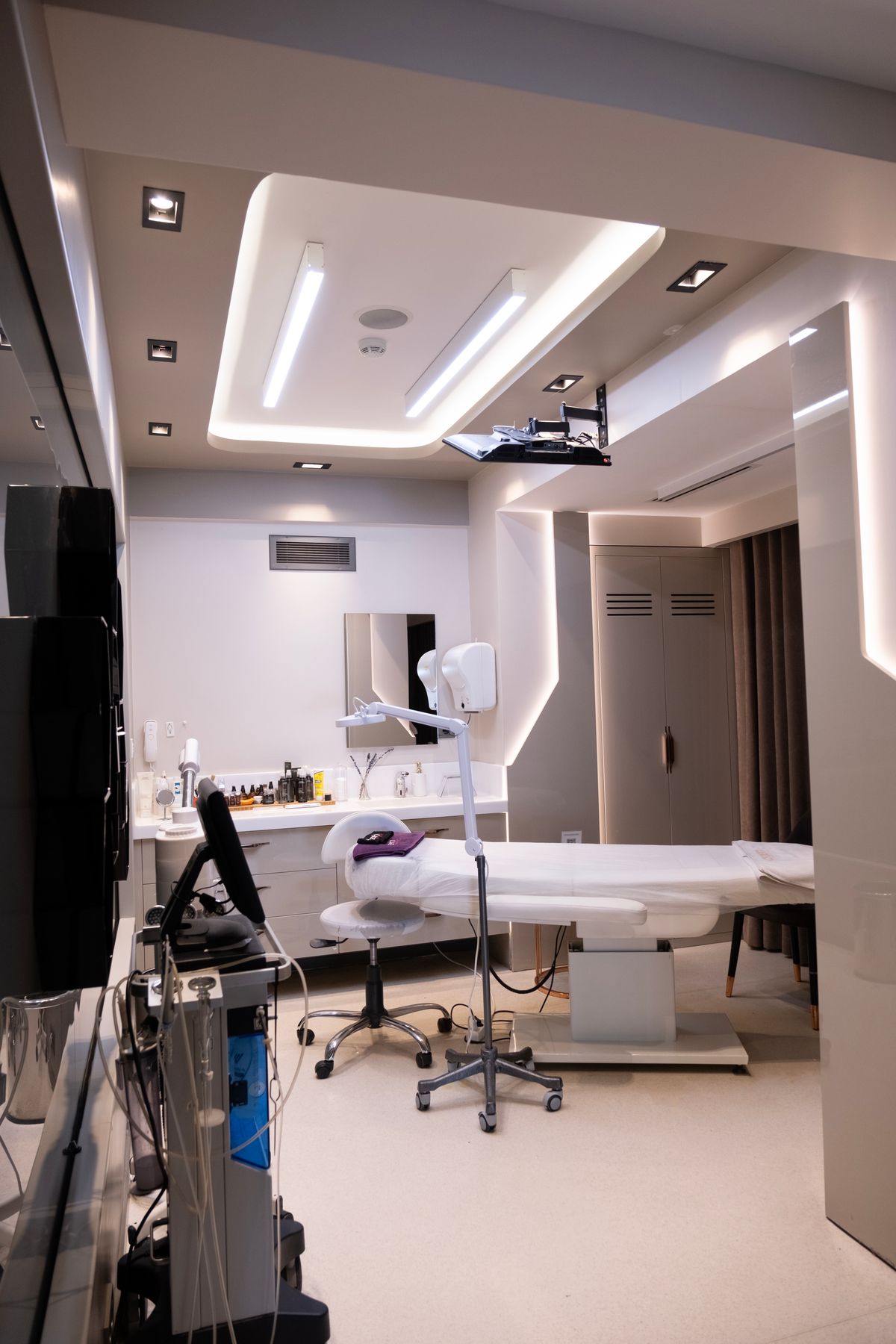
Soft light on a calm, uncluttered clinic interior

What the operation involves

Breast augmentation with implants places a silicone implant behind the breast tissue or behind the chest muscle, through a small incision. The incision may sit under the breast, around the nipple edge or in the armpit, and the surgeon will explain which is suitable for your anatomy and your goals. The operation is usually done under general anaesthetic, and many patients go home the same day, though this depends on the clinic and on your health.

The choice that matters most is not a number on an implant. It is the combination of size, shape, profile and position, matched to your chest width, your skin and the tissue you already have. A bigger implant is not automatically a better result, and a good surgeon will tell you when a smaller or differently shaped option fits your frame more naturally.

Trying on sizing implants in a bra during a consultation, looking at before-and-after photos of people with a similar build, and discussing what you like and dislike about your current shape all help. Bring photographs that show the look you want, and be open about what you do not want.

Recovery, follow-up and the long term

Recovery is gradual. In the first days you can expect tightness, swelling and tenderness, and you will be asked to rest and avoid lifting. Most people return to desk work after about a week or two, but this varies, and strenuous exercise usually waits several weeks. The surgeon will give you a specific timetable and a support garment routine.

Scars are placed to be as discreet as possible and fade over many months, though they do not disappear. Swelling settles slowly, and the final shape takes time to appear. The implants also need to settle into position, so early appearances should not be judged as the end result.

Implants are not lifetime devices. They can need review, and some people choose to replace or remove them in later years. Regular check-ups, awareness of changes in the breasts and attendance at routine screening are part of the long-term picture. Ask the clinic what follow-up it offers, who to call if something worries you and what happens if a revision is needed.

Safety information deserves attention before you decide. Ask about the type of implant, its manufacturer, how the details are recorded so that they can be traced, and the risks that apply to you. These include infection, changes in sensation, capsular contracture and asymmetry. A clear explanation of the risks is a sign of a careful clinic.

When a lift is part of the plan

Some people find that an implant alone does not give them the shape they hope for, because the breast has dropped or the nipple sits low. In that case the surgeon may talk about a lift, or about combining the two. The page on augmentation and mastopexy explains when this is considered, and the additional scars and recovery that come with it.

If your main concern is sagging rather than volume, a lift on its own may be the better choice, and the guide to breast uplift, implants or both walks through how surgeons help patients decide. More general advice on choosing implant size, profile and position adds detail on the choices you will face before surgery. If you are curious about where a breast uplift fits, ask the surgeon to show you how the two operations differ for your own shape.

Planning your time off is part of the decision too. Think about who can help with lifting children or shopping in the first fortnight, how you will travel to appointments, and whether your work involves physical effort. Driving usually waits until you can turn the wheel and brake without pain, and your surgeon or your insurer may have their own guidance. Sleeping on your back with extra pillows is common advice for the first weeks.

Many people also ask about mammograms and breast screening after implants. Implants do not stop you from attending screening, but you should tell the radiographer about them so that the right views are taken. Keep a record of the implant details that the clinic gives you, because you will need them for future care, and ask how to contact the clinic if you move.

Finally, think about the look you want in five or ten years, not only in the first year. Bodies change with age, weight and pregnancy, and an implant does not stop that. A modest, natural-looking choice often ages more gracefully than a very large one, and your surgeon can explain how different sizes tend to behave over time.

Costs and quotes

A quote should be itemised. Ask whether it includes the surgeon's fee, the anaesthetist, the facility, the implants, follow-up appointments, a support bra and any revision policy. A lower figure that leaves out several of these can end up costing more, and a higher figure is not automatically a guarantee of better care. Compare like with like and ask for it in writing.

Preparing for the consultation

Write down your questions, note your medical history, and bring a list of medicines. Tell the surgeon about any family history of breast problems, previous surgery and plans for pregnancy or breastfeeding. Ask how many procedures of this type the surgeon performs, where the surgery will take place and who will look after you afterwards.

It is wise to take time between the first consultation and the decision. Many clinics encourage a second visit, which gives you the chance to ask the questions that occurred to you afterwards. A decision made calmly is more likely to be one that you are happy with.

Next step

If you would like to discuss breast augmentation in Harrogate, you can contact Kliniken to arrange a consultation and talk through the options that fit you.

Anyone considering a breast lift wants two answers before anything else: what the operation involves, and what the weeks afterwards will feel like. Patients who ask Kliniken about a breast lift UK procedure often say that the surgery itself worries them less than the unknowns of recovery, so this guide sets out what is typical, what varies from person to person and which questions to raise at consultation. It is general information, and your own surgeon's advice should always take precedence.

A clinician speaking with a patient during a consultation

What a breast lift does and does not do

A breast lift, known medically as mastopexy, raises and reshapes breast tissue and removes excess skin so that the breast sits higher on the chest. The nipple and areola are often repositioned. The operation does not usually change volume in a major way, which is why some patients combine it with implants when they also want more fullness.

Patients consider a lift after pregnancy, breastfeeding, weight loss or the natural changes that come with age. Realistic expectations help. The aim is a more lifted shape and balanced proportions, not a return to a previous age. A good consultation uses measurements, photographs and a frank conversation about what is achievable for your skin and tissue.

Types of incision and scar patterns

The pattern of scars depends on how much lift is needed. A lighter lift may use a scar around the areola only, or an areola scar plus a vertical line down to the crease. A larger lift may need an anchor-shaped pattern that includes a scar along the crease under the breast. The surgeon chooses the technique based on your anatomy and goals.

Scars fade with time, but they never disappear completely. Most are pink or red for the first months, then gradually flatten and lighten over a year or more. Following aftercare instructions, protecting scars from the sun and avoiding tension on the wounds all help them to heal well.

Combining a lift with implants

Some patients need both a lift and added volume. In that case, the surgeon may recommend a combined procedure or two stages, depending on the degree of sagging and the size of implant. Combined surgery is more complex and has its own risks. Kliniken describes this option on its page about augmentation and mastopexy, and a plain-language explainer on breast uplift, implants or both helps patients weigh the choices before booking a consultation.

Implant choices bring their own decisions about size, profile and position. Our article on choosing implant size, profile and position with confidence walks through those, which is useful even if you are still undecided about adding volume.

The first days after surgery

Most breast lifts are performed under general anaesthetic, and many patients go home the same day or after one night. Expect soreness, swelling and bruising. Surgeons usually give pain relief and ask patients to wear a supportive garment day and night for a period. Dressings are checked at an early follow-up, and drains are used in some cases.

You will need someone to take you home and to help for the first days. Plan time off work, avoid lifting and arrange for household tasks to be shared. Sleep with your upper body raised and avoid lying on your front or side until your surgeon says it is safe.

Weeks two to six

Most patients feel noticeably better after the first week or two. Swelling and bruising reduce, though the breasts may look high and firm at first, a stage that settles as tissues relax. Light walking is encouraged, because it supports circulation, while heavy exercise and lifting remain off limits for several weeks. Desk work is possible for many patients at around two weeks, depending on comfort and the nature of the job.

Keep follow-up appointments. They allow the surgeon to check healing, adjust the support garment advice and reassure you about normal changes. Contact the clinic promptly if you notice increasing pain, redness, discharge, fever or marked asymmetry that worsens.

Months two to twelve

The final shape emerges gradually. Swelling continues to settle over several months, and scars mature over a year. Sensation in the nipple or breast may change temporarily, and in some patients permanently. Your surgeon will talk through this risk during consultation. Maintaining a stable weight and wearing a well-fitting bra help preserve results.

A breast lift does not stop ageing or the effects of gravity. Over time, tissues continue to change, and some patients later consider a revision. Discuss longer-term expectations and maintenance during your consultation.

Costs and what they include

Prices depend on the type of lift, the surgeon, the hospital and whether implants are included. Ask what the quote covers: consultation, surgery, anaesthetic, hospital stay, garments, follow-up visits and any revision policy. Our guide to what breast augmentation prices include beyond the implants explains how to read a package, and the same logic applies to a lift.

Preparing your home and your mind

Preparation makes recovery smoother. Before surgery, stock the freezer, arrange help with children or pets and set up a comfortable resting space with pillows and a bedside table. Stop smoking well ahead, as nicotine slows healing and raises complication risks, and ask your surgeon about medicines and supplements to pause. Many patients also benefit from talking through their feelings before and after surgery. It is normal to feel emotional while swelling is at its peak, and support from friends and the clinic team can make those weeks easier to bear.

Questions for your consultation

Which technique do you recommend for me and why? Where will the scars be? What are the main risks? What will recovery look like week by week? Can I see before and after photographs of patients with similar anatomy? What happens if I am unhappy with the result? Who will see me after the operation? Write the answers down and compare.

Final thoughts

Good outcomes begin with a clear conversation and realistic expectations. If you would like to talk to a surgeon about whether a lift is right for you, use the contact page for Kliniken to ask about a consultation.