Which Headlight Conversion Is Brightest for the Chevy S10
When it comes to upgrading the headlights on your Chevy S-10, the debate between sticking with halogen or making the jump to LED is one of the most common discussions among owners. Whether you drive a first-gen square-body or a second-gen rounded model, the factory lighting on these trucks is notoriously dim by today's standards. Upgrading isn't just about style—it's about safety and visibility on dark roads. But which option actually delivers the brightest, most usable light for your dollar? Let's break it down.
First, let's look at the standard halogen setup. The S-10 originally came with sealed beam units or composite housings using 9004 or 9007 halogen bulbs. These produce a warm, yellowish light that typically outputs around 1,000 to 1,200 lumens on low beam. The technology is simple: a tungsten filament heats up and glows, producing light as a byproduct of heat. The advantage? Halogens are cheap, widely available, and have a predictable beam pattern when used with factory reflectors. However, they are inefficient—roughly 80% of their energy is wasted as heat. They also suffer from significant lumen depreciation over time, meaning your already dim headlights get even dimmer as the bulbs age.
Now enter LEDs. A quality LED conversion bulb for the S-10 can produce anywhere from 3,000 to over 5,000 lumens per bulb, often tripling the raw output of a new halogen. Instead of a glowing filament, LEDs use semiconductors that emit light when electricity passes through them. This allows for a crisp, pure white light (typically 5000K to 6000K color temperature) that closely mimics daylight. That color temperature is crucial—it reduces eye strain and increases contrast, making obstacles like potholes, debris, or animals much easier to spot at speed. On paper, LEDs are unquestionably “brighter.”
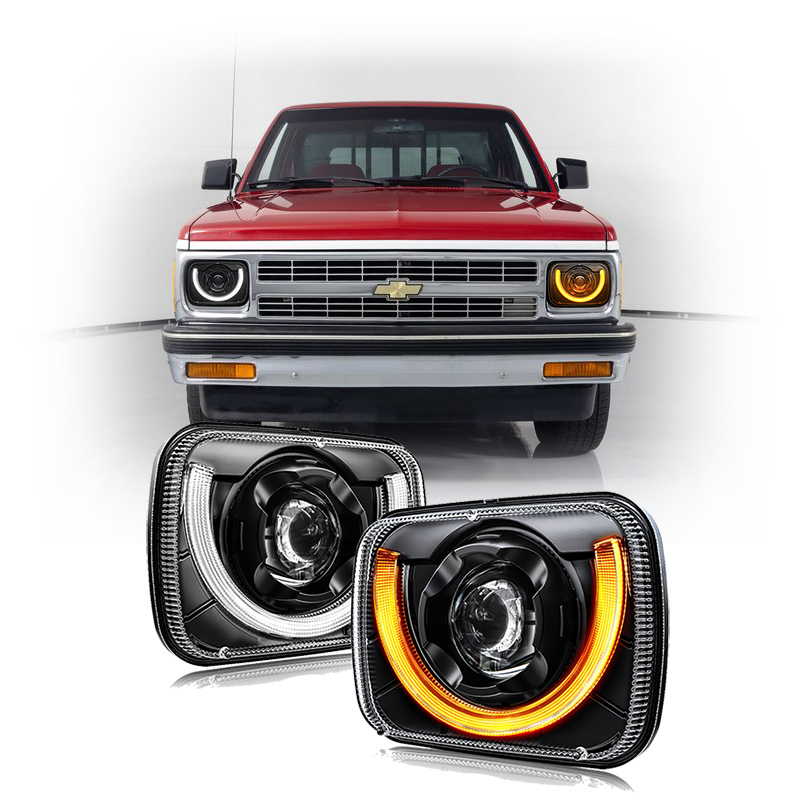
However, raw lumen numbers don't tell the whole story. Brightness is useless if the light isn't aimed correctly. Here lies the biggest pitfall for S-10 owners. The stock reflector housings are designed specifically for the 360-degree light emission of a halogen bulb. When you drop an LED bulb into that same housing, the light source often comes from two or three small chips positioned on a flat blade. This does not mimic the filament location perfectly. As a result, the light scatters improperly, creating hot spots directly in front of the truck while leaving the sides and distance poorly lit. Worse, that scattered light blinds oncoming traffic, making your “bright” upgrade a hazard to others. If you choose LEDs, you absolutely must adjust your Chevy S10 headlight aim downward and consider installing projector housings designed for LED or HID bulbs to maintain a sharp cutoff line.
Beyond raw output, consider the beam pattern and distance. Halogens, despite being dimmer, tend to produce a longer, narrower throw of light down the road because their reflectors are optimized for that specific light source. LEDs produce a wide, flood-like beam that illuminates the foreground beautifully but may struggle to reach as far unless paired with high-quality optics. For highway driving at 60 mph, distance matters more than width. A well-aimed halogen setup can sometimes outshine a poorly designed LED kit in long-range visibility, even if the LED seems brighter in a parking lot.
Reliability is another factor. Halogen bulbs generate extreme heat inside the engine bay, which can degrade wiring and connectors over time—a known issue on aging S-10s. LEDs, conversely, run much cooler at the diode, though they do require heat sinks or fans on the back of the bulb to dissipate heat from the driver module. This can be a problem in tight S-10 headlight buckets, as the bulky heatsink may not fit without modifying the dust cap or trimming the housing. Furthermore, cheap, non-resistor LEDs can cause hyper-flash or flickering because the S-10's electrical system expects the lower resistance of a halogen bulb.
So, which is genuinely “brightest”? If we define brightness purely by lumens and color clarity, LEDs win decisively. A premium LED kit from a reputable brand can produce nearly four times the light output of a fresh halogen. But if we define brightness as “effective, usable illumination that doesn't blind others and reaches far down the road,” the answer becomes murky. A halogen bulb with a fresh, high-output upgrade (like a 9007 SilverStar Ultra) in a clean, properly aimed housing will often outperform a cheap LED drop-in that scatters light everywhere.
For most S-10 daily drivers, the sweet spot is this: invest in new, high-quality halogen bulbs and install a heavy-duty relay harness that draws power directly from the battery. This bypasses the old, resistive factory wiring and delivers full voltage to the bulbs, often increasing halogen output by 30% without any glare issues. If you truly want LEDs, pair them with aftermarket projector headlight housings specifically designed for LED technology. This combination gives you the raw brightness advantage without sacrificing beam control.
Ultimately, the brightest headlight is the one that lets you see clearly while keeping you legal and safe. For a budget restoration, stick with halogens and a relay. For a modern overhaul, go with a full projector-LED conversion. But never drop LEDs into old reflectors and call it a day—you'll be the brightest nuisance on the road, not the best-lit driver.
