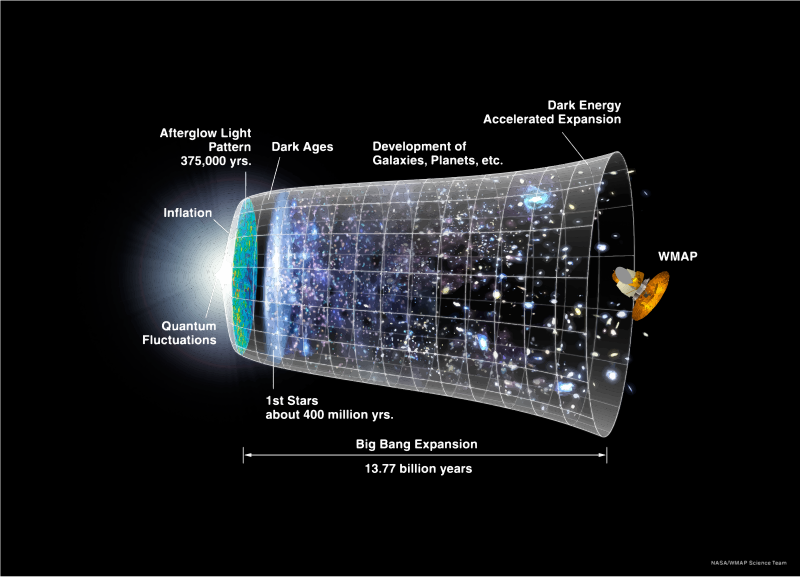
Physicists Pin Down Nuclear Reaction From Moments After the Big Bang
Physicists Pin Down Nuclear Reaction From Moments After the Big Bang
Paul Sutton – personal blog
Physicists Pin Down Nuclear Reaction From Moments After the Big Bang
Physicists Pin Down Nuclear Reaction From Moments After the Big Bang
Ultrafast 3d camera
This looks pretty impressive Physicsworld article on new ultra fast camera, 100 billion frames per second in 3d.
#physicsworld,#camera,3d,#100billionfps,#photography, #research,#science,#physics
Rocks and Diamonds : Bombs
So by now you have got the general idea. To expand on Dynamite, there are also bombs. These explode when either dropped or have something dropped on them (e.g a rock)
So here I have already added some more wall and to add to the puzzle element you need to drop the rock on to the bomb. Timing here is important.
As with dynamite, a bomb will destroy the 8 squares around it when detonated.
As an extension to this, lets go the other way round and drop a rock on a bomb, see what happens and fix any issues that come from this.
From this, you see why testing is important. But also making sure you are not making it too easy for the player.
Rocks and Diamonds : Doors and Keys
So on to, doors and keys. In this video I add a wall, a door and a key.
As you can see you need the right key / door combination. So during testing I have found that
So had to go back and make a minor change to this
So this highlights why you need to keep testing. I have left this in, rather than creating the perfect video with no errors.
I also got killed by a falling gem, so again, left this in.
Rocks and Diamonds : Dynamite
Dynamite can be very useful in Rocks and diamonds.
One option is to have this explode when you start the level, the 2nd option is to allow you to carry and drop when you want.
Each of these has it's own use. Having things explode at the starts adds some dynamics to the start of the video.
Rocks n diamonds level configuration
I am working on a few resources to help people get started with Rocks and Diamonds level creation.
So this video shows the basic level configuration setting size, time and number of gems to collect. Then I add the required elements to the level area (gems and an exit). Finally I test the level to make sure it is working ok.
Particle Physics course follow up
I am just following up on my OpenLearn particle phyiscs course review follow up.
As part of this I had to work out the charge spectrum on groups of 3 quarks.
This short article explains (or tries to) how to do this. Firstly thank to the course creators, Open Learn and the Open University without whom the course would not have been possible. Thank you also to users on the physics irc channel who gave me some help with doing this.
So if we take a Proton as an example, this has 3 quarks
uud
so firstly I had to write down all the possible combinations
uuu uud udu udd duu dud ddu ddd
There are repeated combiations here so by removing these we get
uuu ddd duu ddu
From here we then need to list the charges associated with each, and calculate totals
uud = 2/3 + 2/3 + 2/3 = +2e ddd = -1/3 + -1/3 + -1/3 = -1e duu = -1/3 + 2/3 + 2/3 = 1e ddu = -1/3 + -1/3 + 2/3 = 0
Now list the totals
+2e -1e 1e 0
if we put them in some sort of order
-1e 0 1e +2e
We get the charge spectrum
The activity had a sort of frurt machine that would come up with combinations of all the 6 quarks
u d s c t b
Details of where they fit in to the standard model and associated charges can be found on the standard model table.
This may sound complex, which is perfectly fine, once it was explained to be, and someone worked through it, it was much clearer, I decided to write it all down, and then type up here, as this helps to reinforce learning.
Given there are 6 quarks, the number of different combinations of 3 quarks is huge. Then think there would be anti baryons, so the same combination but with antiquarks
Mesons have combinations of 1 quark and 1 antiquark.
SeaGL day one comments
So yesterday I attended part of the Seattle Linux user group conference. This was really well put together with talks live streamed using Big Blue Button,along side chat on IRC and Jitsi.
I attended one talk on Democratising Documentation from Megan Guiney, which was partly about 'zines' which are small independent publications, and the culture around this, methods of putting them together, and how this was done on a budget before the days of the internet and easier access to technology.
I also attended a talk on demystifying collaborator culture, from Jill Rouleau. This was also interesting in that it reaches out to potential new contributors and explains the culture / expectations behind mailing lists, irc etc. This could be useful for the Debian Acacdemy team so I also sent the details to the Academy mailing list.
Hoping to catch up on a few talks later today, and also catch up on recordings of talks that I missed.
The Dawn of Gravitational Wave Astronomy
So on to another high end physics lecture
This is from the Institute of Physics
Seattle GNU/Linux conference
Seattle GNU/Linux conference is this Friday and Saturday you can find more information and a join link here
You can join online
Fri 9:00–16:30 PST (17:00–00:30 UTC) Sat 9:00–16:30 PST (17:00–00:30 UTC)
Sorry for the short notice, I have only just found out about this.