Sewing, wearing — it's cultural anthropology
Original article in Japanese were posted on November 2nd 2025 https://eveningstar.sblo.jp/articles/10
Good evening. The fragrant olive bloomed later this year and is now in full bloom. When I stroll outside, its scent drifts by here and there.
I made a shirt this time — a slightly unusual one called an “Echizen shirt” (越前シャツ). According to the booklet I used, it was probably made from the Meiji era to early Shōwa era in a part of Gifu Prefecture, Japan.
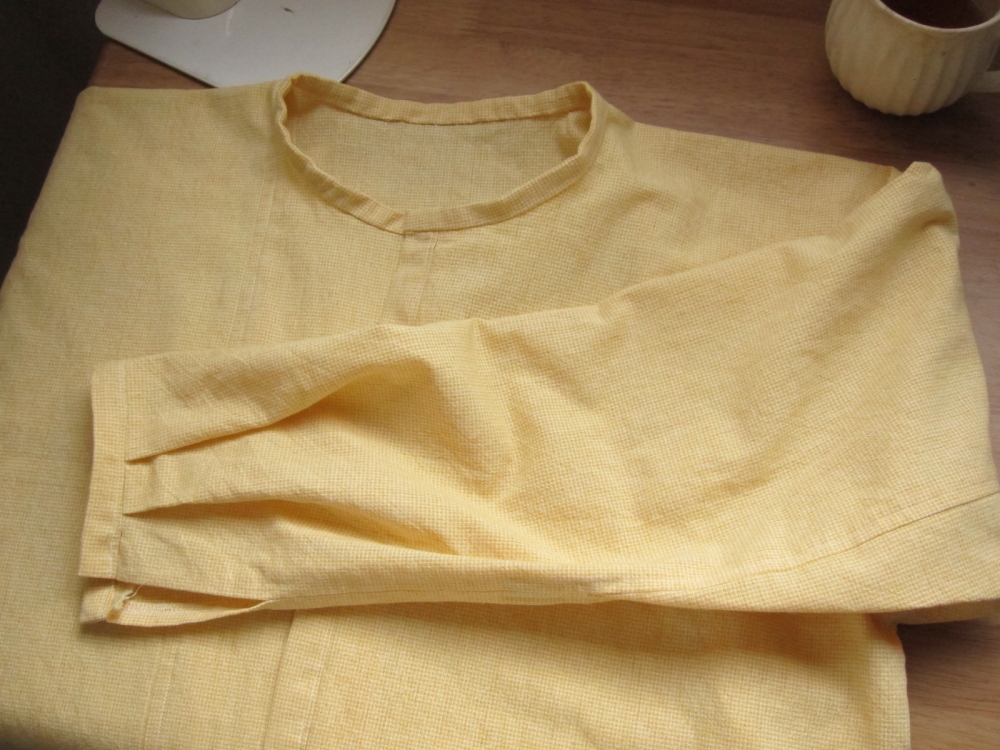
At first glance it’s a simple shirt with a narrow band collar. Almost every piece is cut from straight lines, except the collar and neckline.
I found the booklet by chance from 石徹白洋品店 (Itoshiro Yohinten) and bought it out of curiosity. The booklet says Itoshiro Yohinten learned the shirt-making method from a woman born in Shōwa 2 (1927), then produced the booklet and now also sell finished Echizen shirts under their brand. The instructions are adapted for today’s materials (110 cm wide fabric commonly sold now) and for modern body shapes. After making one, my impression was: sewing and wearing — the whole process makes me feel like cultural anthropology.
This shirt (except for the collar and neckline) uses no paper patterns — you draw rectangles and triangles directly on the fabric and cut. I wondered whether those shapes really would become a shirt, but as I sewed them together it took shape properly. What surprised me most was that I could make it from a short length of fabric (110 cm width × 1.3 m length) in my size (I’m tall and a bit plump) with long sleeves. If I used a modern pattern for my size, I’d expect to need at least 2.2 m of fabric.
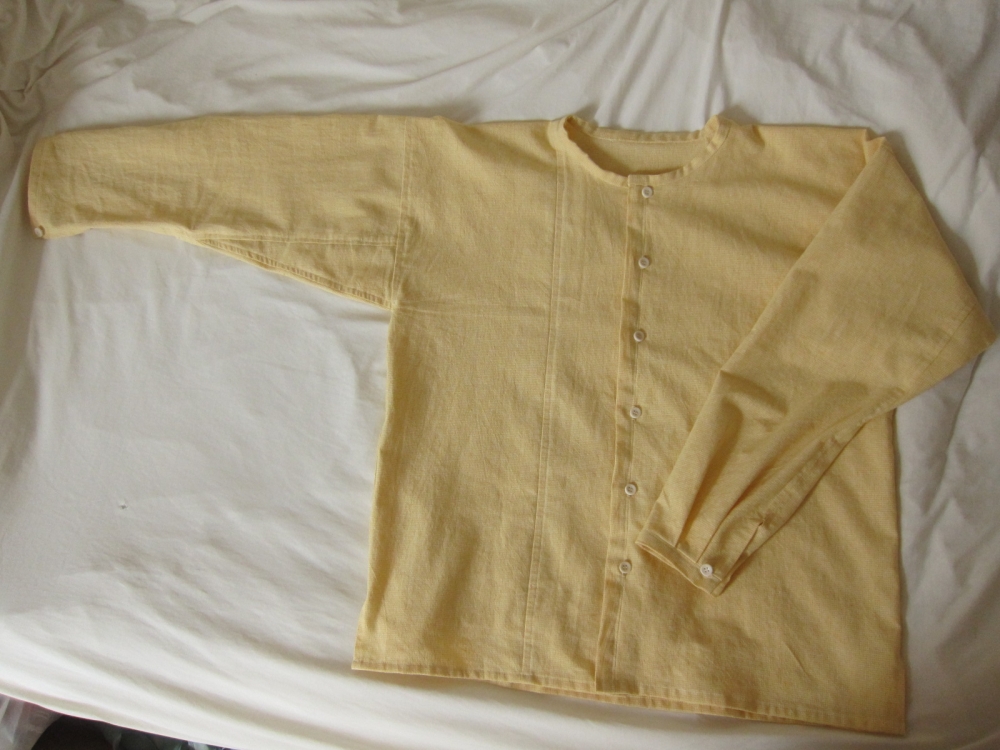
The booklet says people in Itoshiro originally used narrow kimono fabric and hand-sewed these shirts. I can imagine how hard it must have been to stitch through thick areas with several layers — I made mine on a sewing machine.
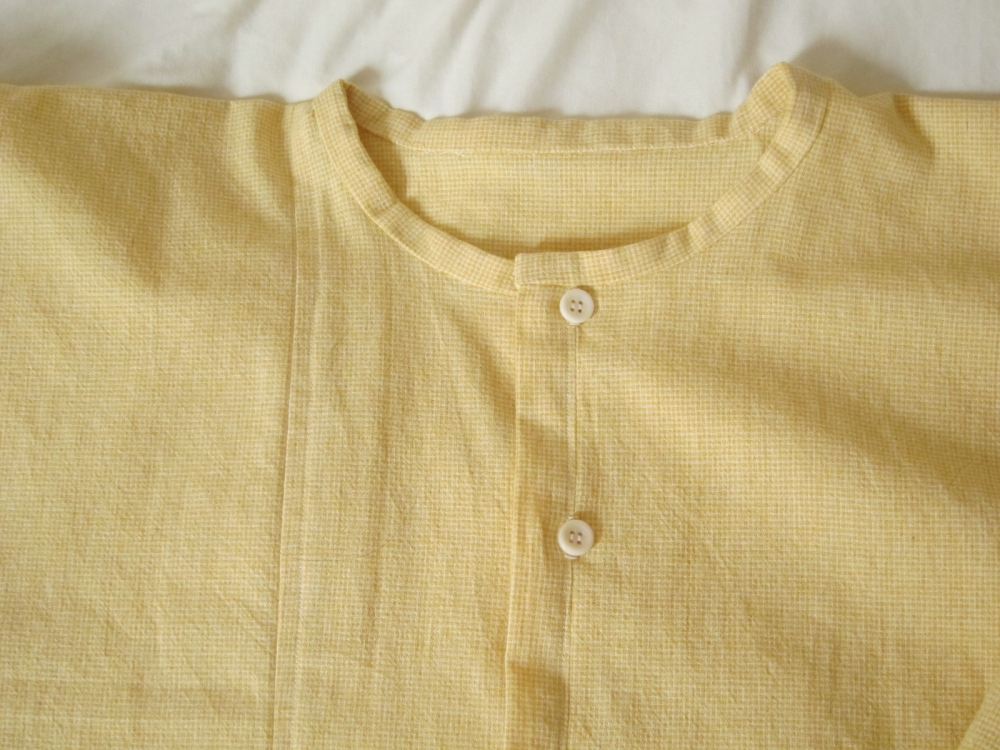
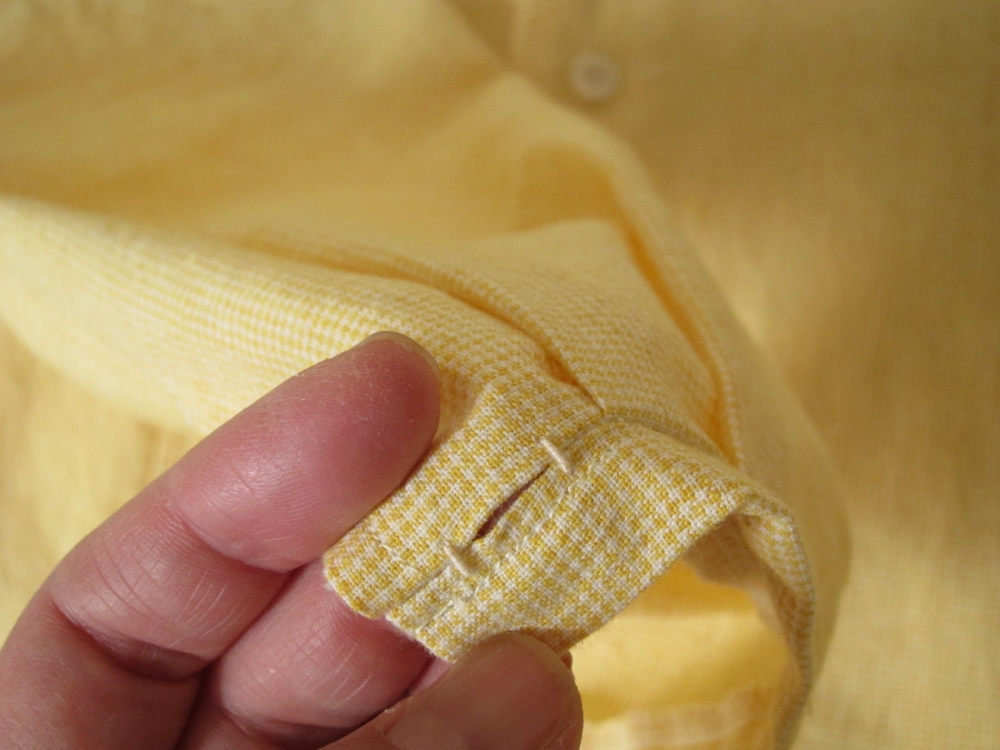
The method for buttonholes is clever: they use the seam of the front band rather than cutting buttonhole slits first. I was impressed by whoever invented that technique. The buttonholes still need a hand bar-stitch (Kan-nuki-dome 閂止め) to reinforce them. While stitching those, I pictured people long ago working the same motion with the same care, wishing safety and health for the wearer.
The finished shirt looks a bit like a crewneck cardigan; the narrow band collar and cuffs are lovely and my favorite details. It has a workwear mood that I really like.
I’ll wear this shirt as an accent color in outfits this season, and in warmer months I’d like to use it as a lightweight outer layer. I’m planning to make more from different fabrics.
If you’re interested, here’s the shop page for the booklet: https://itoshiro.org/products/bk2104es (There are digital and paper editions; both are probably written in Japanese.)
Notes
Fabric: 110 cm width × 1.3 m length Buttons: nut buttons, 11.5 mm diameter × 8 Time: about 2 days Material cost: ¥368 (buttons only; I used fabric and thread from my stash and forgot those costs)